
Every fire alarm system has the same goal: detect a fire early and warn people so they can leave safely. But there are two main ways to build that system, conventional and addressable, and the choice affects how fast your team finds the fire, how easy the system is to maintain and how well it fits your building. This article explains the difference in plain terms.
How a conventional fire alarm system works
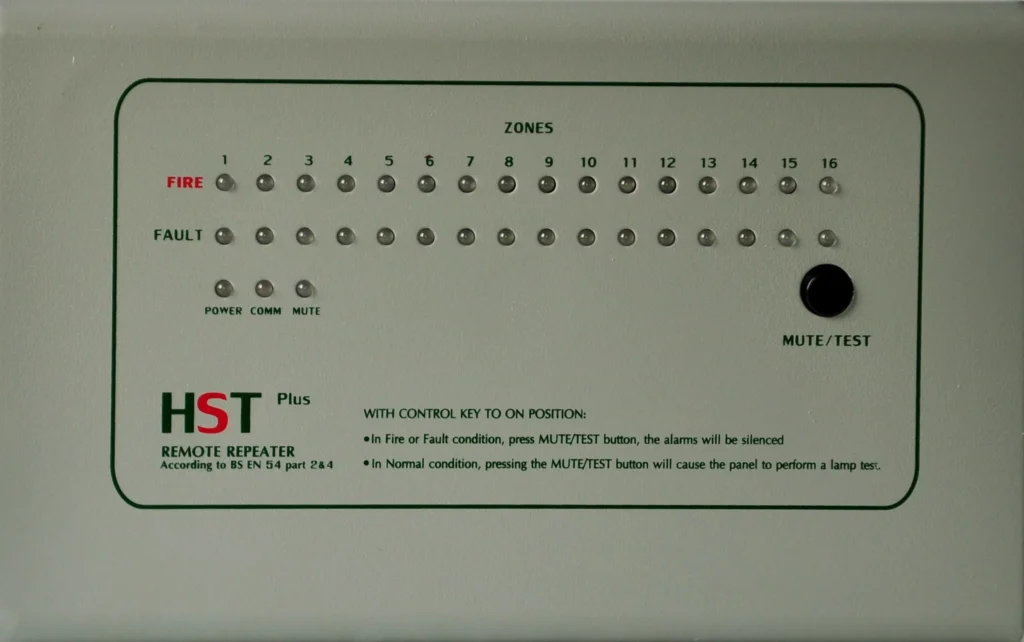
In a conventional system, the building is divided into zones. Each zone is a circuit that connects several detectors and manual call points back to the control panel. When any device in a zone goes into alarm, the panel shows that zone, for example “Zone 3: First floor”, but it cannot tell which detector triggered it.
This is simple and cost-effective for smaller buildings. In a shop, clinic or small office, knowing the zone is usually enough to find the fire quickly.
How an addressable fire alarm system works
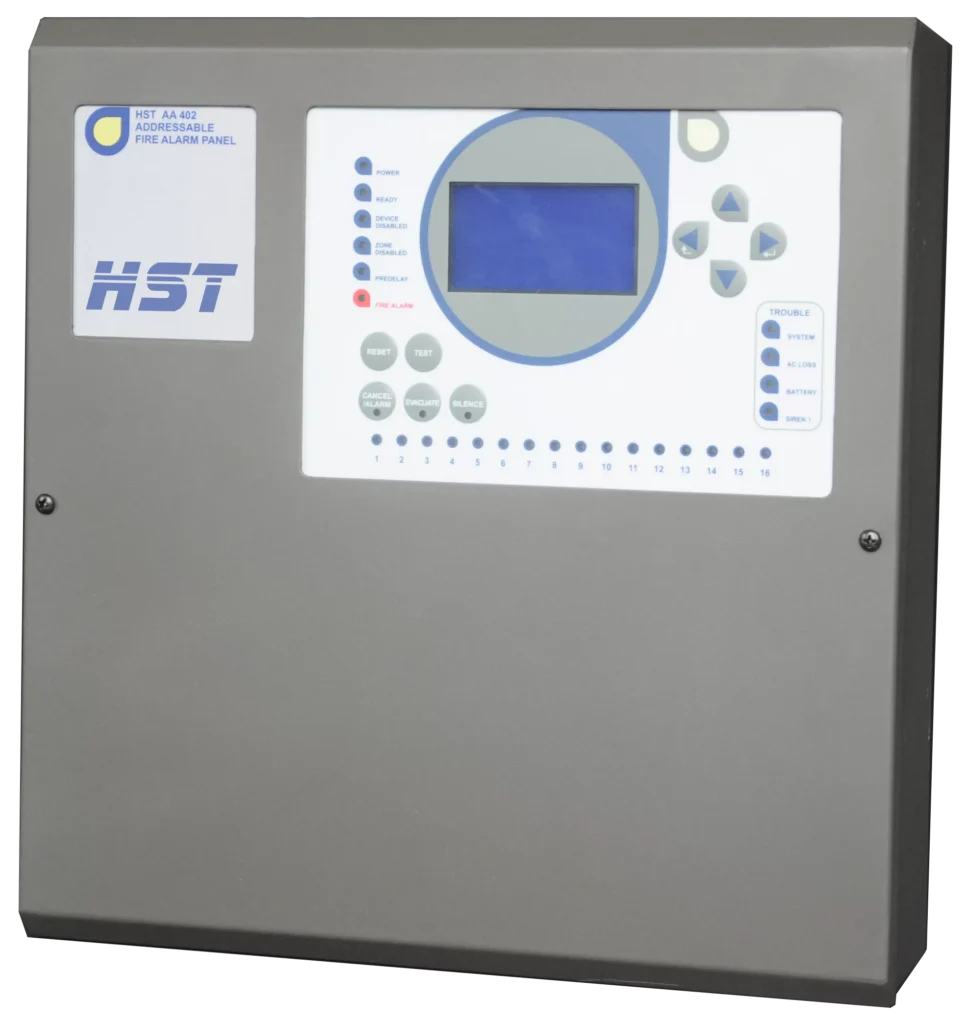
In an addressable system, every detector, call point and module has its own address on a loop connected to the control panel. When a device goes into alarm, the panel shows exactly which one it is and where it is, for example “Detector 27: Meeting room, second floor”. The panel can also report faults on individual devices, such as a dirty or disconnected detector.
This makes addressable systems the usual choice for larger buildings: hospitals, hotels, malls, factories, schools and multi-floor offices, where checking a whole zone room by room would waste valuable time.
Key differences at a glance
- Alarm location: conventional shows the zone; addressable shows the exact device.
- Wiring: conventional uses a circuit per zone; addressable connects many devices on one loop.
- Fault finding: addressable panels report problems on individual devices, which makes maintenance easier.
- Control of other systems: addressable modules can monitor or control equipment such as fire doors, elevators or ventilation.
- Initial cost: conventional equipment usually costs less, which suits smaller projects.
How to choose for your building
Start with the size and layout of the building. If it is small, on one or two floors, with a limited number of rooms, a conventional system is often enough. If it has many rooms, several floors or areas that are hard to reach quickly, an addressable system will save time when every second counts. Also think about the future: if the building may expand, choose a system with spare zones or loop capacity.
Whichever system you choose, it must follow the fire safety requirements that apply to your building, and it should be designed and installed by qualified professionals. Regular testing and maintenance keep detectors, call points and sounders ready when they are needed.
Browse fire alarm equipment
- Addressable Fire Alarm Systems
- Addressable Control Panels
- Addressable Detectors
- Conventional Fire Alarm Systems
- Conventional Control Panels
- Conventional Detectors
Talk to our team
Delta Electronics supplies HST addressable and conventional fire alarm equipment from Nasr City, Cairo. Share your building details with our team and we will help you choose suitable panels, detectors and accessories.